Weight Loss Management Q & A

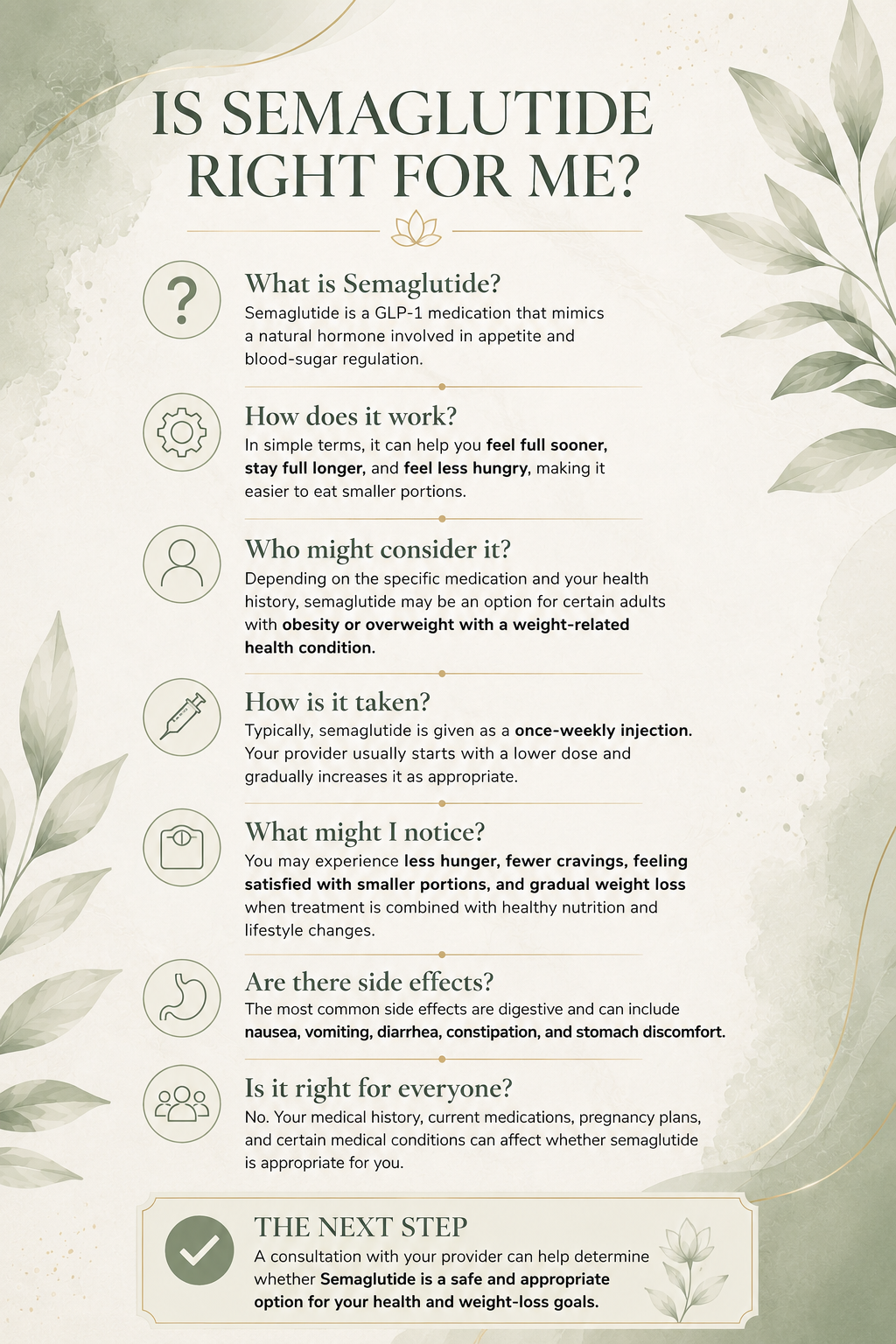
IS SEMAGLUTIDE RIGHT FOR ME?

What is Semaglutide?
Semaglutide is a GLP-1 medication that mimics a natural hormone involved in appetite and blood-sugar regulation.

How does it work?
In simple terms, it can help you feel full sooner, stay full longer, and feel less hungry, making it easier to eat smaller portions.

Who might consider it?
Depending on the specific medication and your health history, semaglutide may be an option for certain adults with obesity or overweight with a weight-related health condition.

How is it taken?
Typically, semaglutide is given as a once-weekly injection. Your provider usually starts with a lower dose and gradually increases it as appropriate.

What might I notice?
You may experience less hunger, fewer cravings, feeling satisfied with smaller portions, and gradual weight loss when treatment is combined with healthy nutrition and lifestyle changes.

Are there side effects?
The most common side effects are digestive and can include nausea, vomiting, diarrhea, constipation, and stomach discomfort.

Is it right for everyone?
No. Your medical history, current medications, pregnancy plans, and certain medical conditions can affect whether semaglutide is appropriate for you.

THE NEXT STEP
A consultation with your provider can help determine whether Semaglutide is a safe and appropriate option for your health and weight-loss goals.

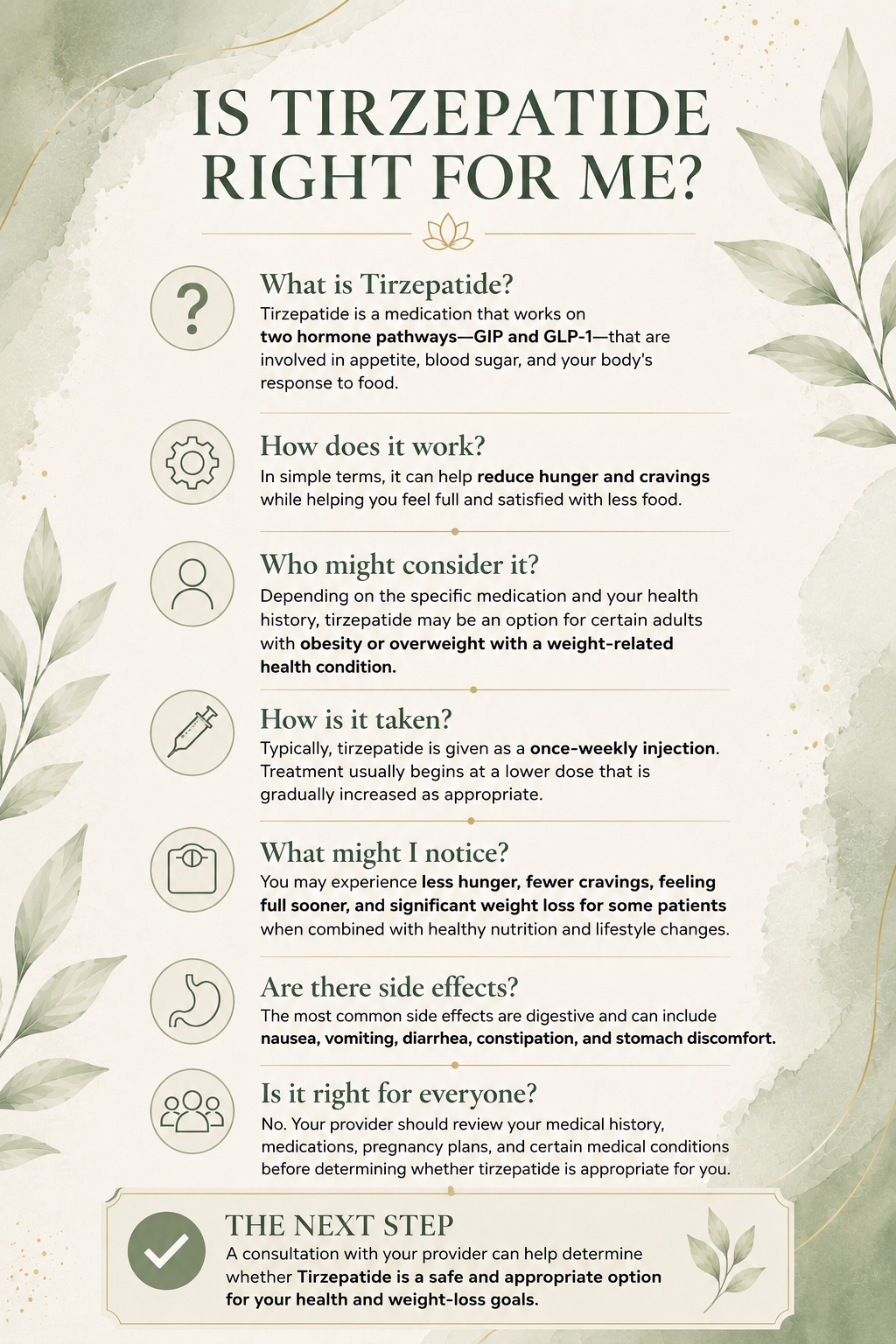
IS TIRZEPATIDE RIGHT FOR ME?

What is Tirzepatide?
Tirzepatide is a medication that works on two hormone pathways—GIP and GLP-1—that are involved in appetite, blood sugar, and your body's response to food.

How does it work?
In simple terms, it can help reduce hunger and cravings while helping you feel full and satisfied with less food.

Who might consider it?
Depending on the specific medication and your health history, tirzepatide may be an option for certain adults with obesity or overweight with a weight-related health condition.

How is it taken?
Typically, tirzepatide is given as a once-weekly injection. Treatment usually begins at a lower dose that is gradually increased as appropriate.

What might I notice?
You may experience less hunger, fewer cravings, feeling full sooner, and significant weight loss for some patients when combined with healthy nutrition and lifestyle changes.

Are there side effects?
The most common side effects are digestive and can include nausea, vomiting, diarrhea, constipation, and stomach discomfort.

Is it right for everyone?
No. Your provider should review your medical history, medications, pregnancy plans, and certain medical conditions before determining whether tirzepatide is appropriate for you.

THE NEXT STEP
A consultation with your provider can help determine whether Tirzepatide is a safe and appropriate option for your health and weight-loss goals.

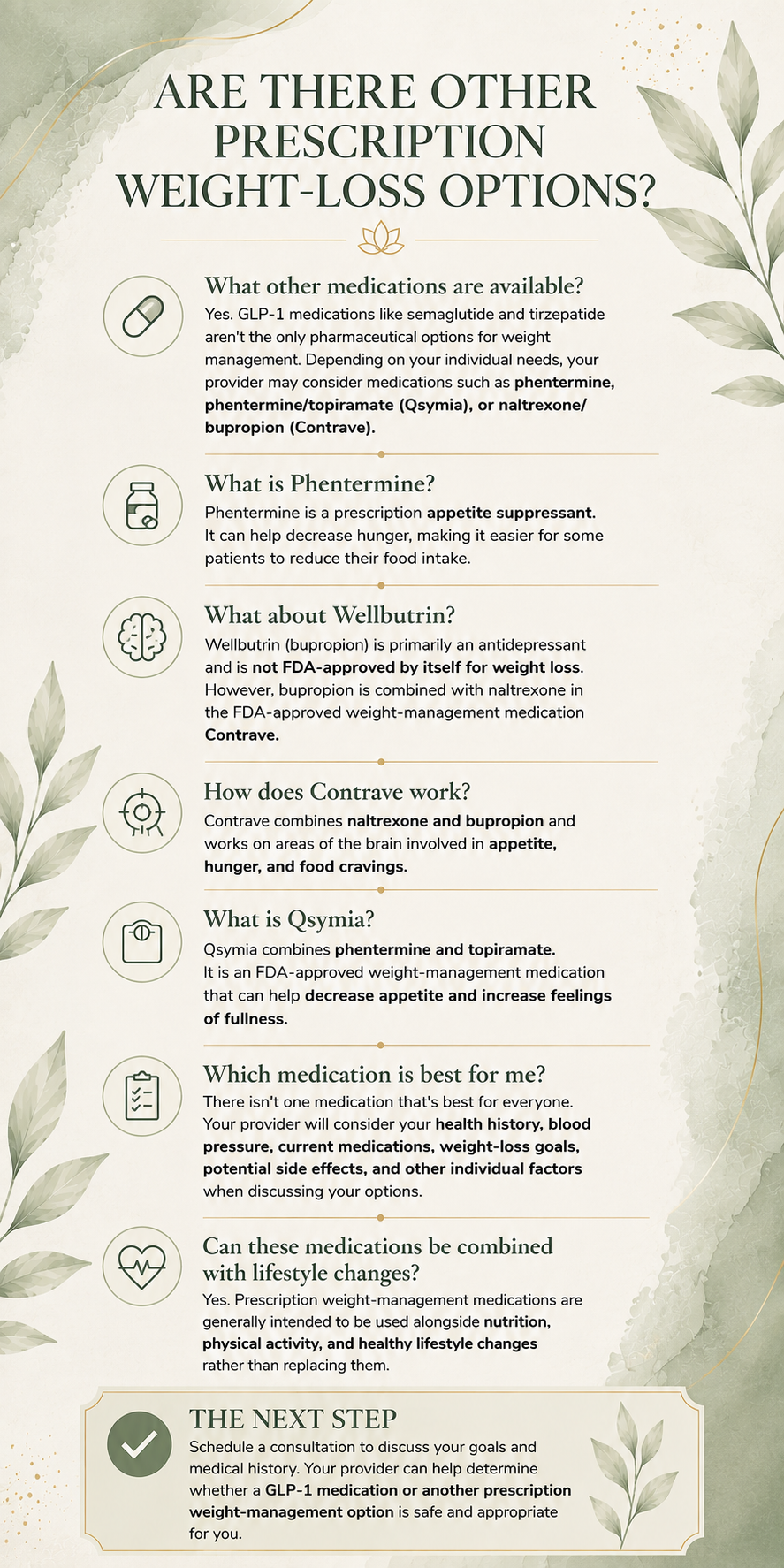
ARE THERE OTHER PRESCRIPTION WEIGHT-LOSS OPTIONS?

What other medications are available?
Yes. GLP-1 medications like semaglutide and tirzepatide aren't the only pharmaceutical options for weight management. Depending on your individual needs, your provider may consider medications such as phentermine, phentermine/topiramate (Qsymia), or naltrexone/bupropion (Contrave).

What is Phentermine?
Phentermine is a prescription appetite suppressant. It can help decrease hunger, making it easier for some patients to reduce their food intake.

What about Wellbutrin?
Wellbutrin (bupropion) is primarily an antidepressant and is not FDA-approved by itself for weight loss. However, bupropion is combined with naltrexone in the FDA-approved weight-management medication Contrave.

How does Contrave work?
Contrave combines naltrexone and bupropion and works on areas of the brain involved in appetite, hunger, and food cravings.

What is Qsymia?
Qsymia combines phentermine and topiramate. It is an FDA-approved weight-management medication that can help decrease appetite and increase feelings of fullness.

Which medication is best for me?
There isn't one medication that's best for everyone. Your provider will consider your health history, blood pressure, current medications, weight-loss goals, potential side effects, and other individual factors when discussing your options.

Can these medications be combined with lifestyle changes?
Yes. Prescription weight-management medications are generally intended to be used alongside nutrition, physical activity, and healthy lifestyle changes rather than replacing them.

THE NEXT STEP
Schedule a consultation to discuss your goals and medical history. Your provider can help determine whether a GLP-1 medication or another prescription weight-management option is safe and appropriate for you.